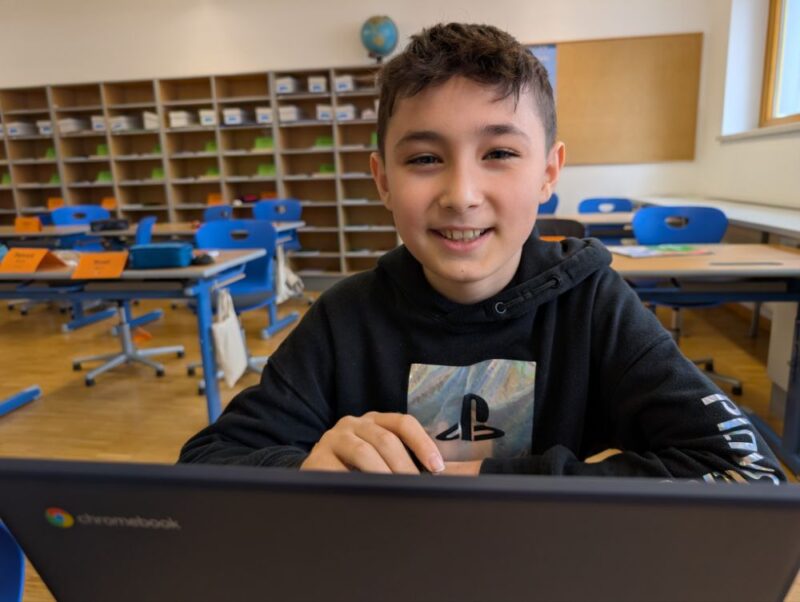
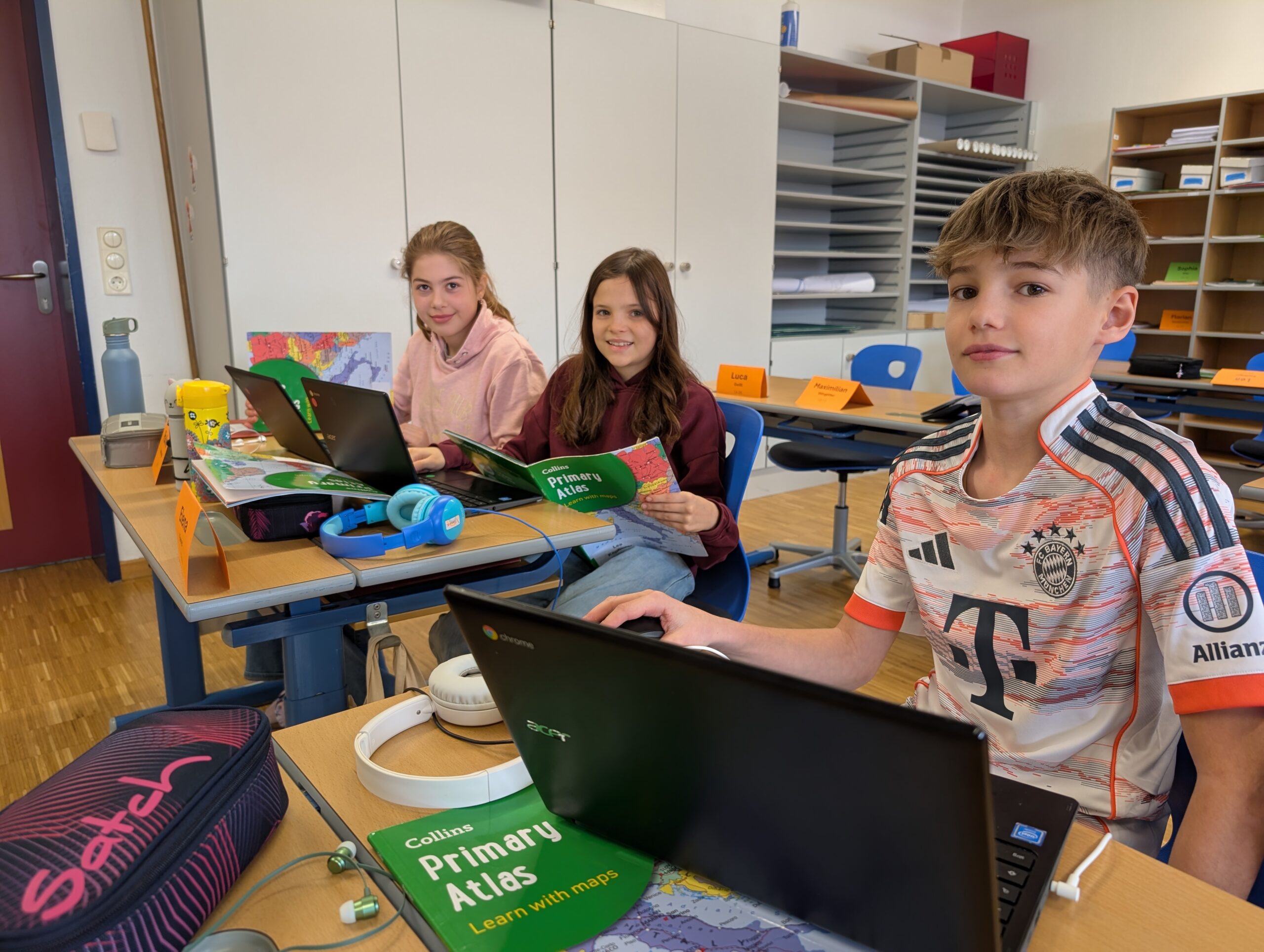
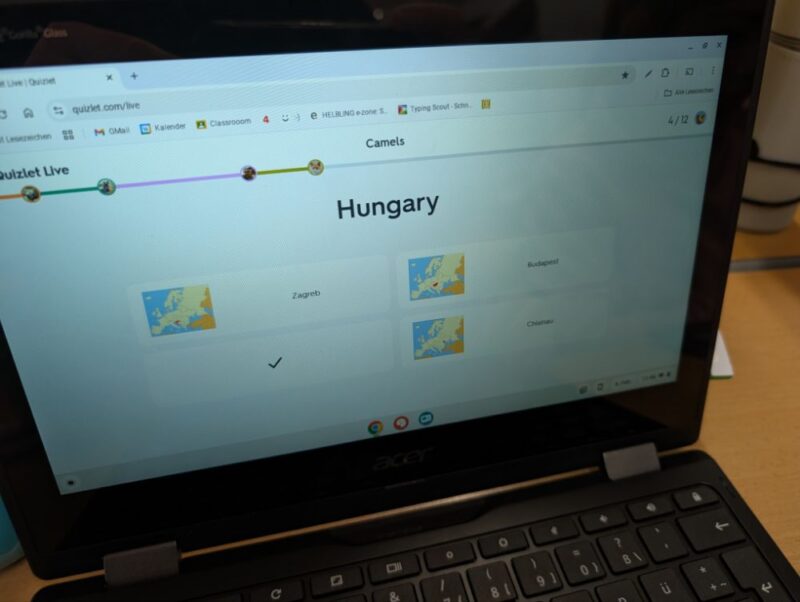
Today, the students of class 1AB took their bilingual Geography lesson to a new level. The classroom was buzzing with excitement as the group engaged in their very first session of Quizlet Live, turning their study of Europe into a thrilling team competition.
To support their learning, we developed a Quizlet set focusing on the map 🗺️ of Europe. A key feature of this set is the integration of audio; every term is voiced from Gabrielle Amestoy to ensure students not only recognize the names of countries and capitals but also master their English pronunciation from the start.
Why Memorize Facts in the Age of Google?
Even in a world where information is always one click away, memorizing countries and capitals still matters. A solid mental map gives students instant spatial context, allowing them to understand political, economic, and cultural topics without constant fact-checking. This quick recall supports deeper critical thinking and builds confidence, so technology becomes a tool for meaningful research rather than a substitute for basic knowledge. Finally, learning the names and pronunciations of our neighbors fosters cultural awareness and helps students grow into informed global citizens.


So toll, was Langkampfen alles bietet.